
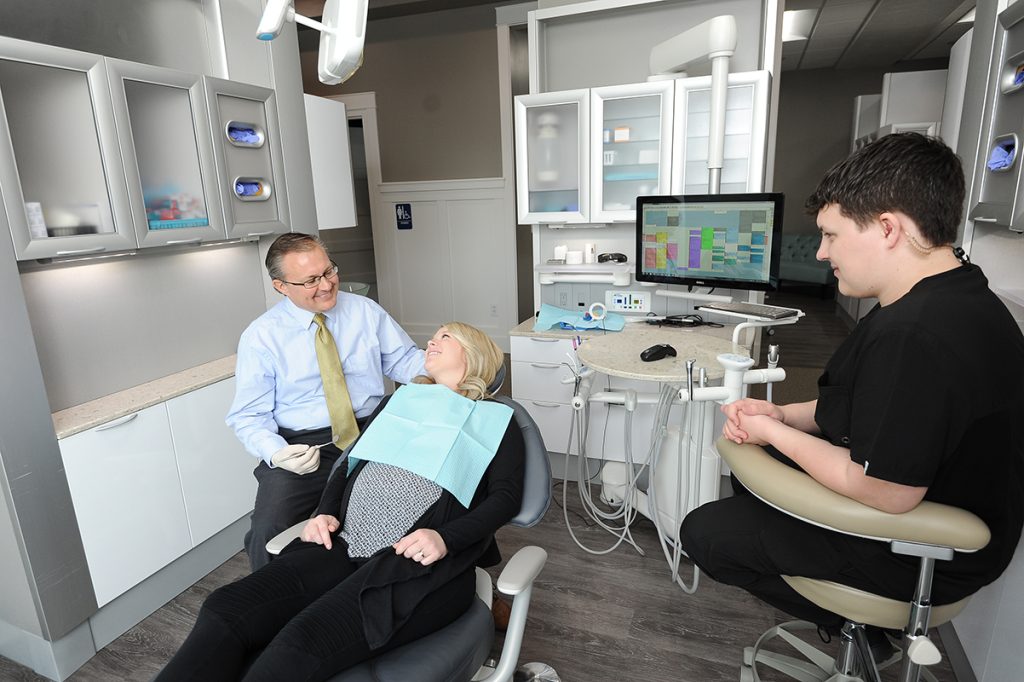
Why redo work happens in dentistry (and why it’s not always about “bad luck”)
We talk to people every week who say some version of this: “I already paid for this once. Why am I back in the chair again?”
Sometimes redo work happens because life happens. Teeth crack. Old fillings wear out. Gums change over time. But a lot of preventable redo work starts earlier, at the planning stage, when the information wasn’t complete or the strategy wasn’t coordinated.
Common failure points patients never see
You usually only see the final product: the crown, the implant, the bridge, the smile. What you don’t see is the architecture underneath that determines whether the result lasts.
- Hidden anatomy and bone limits that a two-dimensional X-ray cannot fully show.
- Bite forces and jaw position that can overload a tooth, crown, or implant.
- Gum health and support that affect long-term stability and esthetics.
- Spacing and alignment that make restorative work either predictable or compromised.
- Disconnected care where multiple offices treat separate parts without a single coordinated plan.
Why high-stakes procedures demand better planning
Not every dental procedure needs advanced planning. A simple filling often doesn’t. But if you’re considering dental implants, oral surgery, or complex restorative work, your margin for error gets smaller.
That’s where 3D dental planning and modern digital dentistry change the game: better information up front, fewer surprises later, and results built for longevity.
What “3D dental planning” actually means
“3D planning” can sound like marketing. It shouldn’t be. It’s simply a higher standard of diagnosis and treatment planning using three-dimensional imaging and digital tools so we can plan around your real anatomy, not an estimate.
CBCT dental scans explained in plain language
A CBCT dental scan (cone beam CT) is a 3D X-ray that shows:
- Bone volume and density in the exact area we’re treating.
- Nerves and sinuses so we can plan safe distances.
- Root positions and tooth anatomy that affect surgery and restorations.
For implant and surgical cases, this is often the difference between “We think this will work” and “We know what the safest, strongest option is.”
Digital scans, photos, and bite records
3D dental planning is not just one scan. A strong dental treatment planning system often combines:
- Digital impressions that capture your teeth accurately without messy trays.
- High-resolution photos to evaluate symmetry, smile line, and gum display.
- Bite analysis to understand how your teeth function under real forces.
Virtual planning and guided execution
Once we have the data, we can plan virtually before we ever begin treatment. For example, in dental implant planning, we can choose implant size and position based on bone, bite, and the final crown position, then use guides when appropriate to translate the plan accurately to the real procedure.
That is what advanced dental technology should do: reduce guesswork, protect outcomes, and help you avoid a second round of treatment you never wanted.
How 3D planning prevents redo work: the five biggest wins
Win 1: safer, more precise implant placement
Implants are not just “put a screw in the bone.” They are a long-term foundation for chewing, speaking, and confidence. Proper implant treatment planning uses 3D imaging to answer critical questions before surgery:
- Is there enough bone in the right spot for the ideal implant?
- Where are the nerves and sinuses, and what safety margins do we need?
- Will the final crown emerge in a clean, healthy, easy-to-clean position?
When implant placement is off by even a few millimeters, the consequences can include difficult cleaning, gum inflammation, bite overload, esthetic issues, or the need for revision. 3D planning helps us prevent those problems before they start.
Win 2: fewer surprises during oral surgery
For wisdom teeth or other surgical extractions, 3D imaging can reveal root curvature, proximity to nerves, and other risk factors. That means a plan built around safety and comfort, not assumptions.
- Better risk assessment so you understand tradeoffs ahead of time.
- Cleaner surgical strategy with fewer “mid-procedure” pivots.
- More predictable healing because the approach matches the anatomy.
Win 3: restorations that fit your bite, not just your tooth
Redo work is often bite-related. A crown can look great and still fail early if the bite forces are concentrated the wrong way. Modern restorative dentistry technology helps us plan crowns, bridges, and larger reconstructions with your function in mind.
In other words: we’re not just fixing a tooth. We’re managing a system.
- More accurate contacts so food traps and floss shredding are less likely.
- Better bite harmony to reduce fractures and soreness.
- Improved longevity because the restoration is built for real use.
Win 4: better esthetics with healthier gums and bone
When people think “3D,” they picture precision. They should also think health. Proper planning can protect gum architecture and bone levels, which is what keeps a smile looking natural over time, especially around implants and front teeth.
- Natural-looking emergence where tooth meets gum.
- Less inflammation risk thanks to clean, cleanable contours.
- Smarter sequencing when gum therapy, orthodontics, and restorations intersect.
Win 5: a coordinated plan when multiple specialists are involved
One of the biggest drivers of redo work is fragmented care. If orthodontics, surgery, and restorative work happen in separate lanes, small disconnects become expensive problems.
At Summit Dental & Orthodontics, comprehensive care under one roof helps keep the plan coordinated. That doesn’t mean every case is identical. It means your strategy is led like a long-term project, not a series of one-off procedures.
- One timeline that respects healing and sequencing.
- One set of records that every clinician uses.
- One team accountable for the outcome.
Where 3D dental planning matters most
Dental implants and implant treatment planning
If you’re missing a tooth, the real question is not only “Can I get an implant?” It’s “What’s the best long-term plan for my mouth?” 3D planning is especially valuable when:
- Bone is thin or has changed after years of missing a tooth.
- Sinus or nerve position limits placement options.
- Multiple implants must align with a bridge or denture.
It supports precise dental treatment that prioritizes safety, cleanability, and long-term stability.
Wisdom teeth and surgical extractions
Not every wisdom tooth needs a CBCT, but when the roots are close to nerves or anatomy is complex, a 3D scan can guide safer decisions and clearer expectations.
- Lower nerve proximity risk evaluation and planning.
- Root morphology that predicts difficulty and approach.
- Reduced unknowns for patients with anxiety.
Full mouth reconstruction and complex restorative cases
If you have multiple failing restorations, worn teeth, bite collapse, or a history of broken crowns, you need more than patches. You need a plan that respects your bite, your joints, your gums, and the long-term service life of the work.
- Sequencing clarity so the “end state” is defined first.
- System-level planning that reduces domino-effect failures.
- Fewer remakes because the design matches function.
Orthodontics and airway-aware planning
Orthodontics is not just about straight teeth. Tooth position affects hygiene, bite forces, and restorative options later. Digital planning helps align goals across orthodontics and restorative dentistry so you don’t end up undoing one treatment with the next.
- Better spacing for implants or veneers when needed.
- Cleaner bite relationships to reduce wear and fractures.
- Long-term retention strategy to protect the investment.
What to expect as a patient at Summit Dental & Orthodontics
If you’re looking for a dentist in Layton Utah because the decision feels high-stakes, our goal is simple: give you clarity, not pressure.
Your exam and diagnostics
We start with the right information. Depending on your needs, that may include a CBCT scan, digital impressions, photos, and a careful periodontal and bite evaluation.
- We look for root causes, not just symptoms.
- We document what we see so you can understand it.
- We prioritize safety and long-term predictability.
How we explain options and tradeoffs
Our approach is advisor-led. That means you should expect plain-language explanations and real tradeoffs, including what happens if you do nothing.
- Best option for longevity when you want to do it once.
- Alternative options when budget or timeline matters.
- Sequence options when treatment must be phased.
Financing and clarity on costs
Cost surprises break trust. We work to keep estimates clear, discuss insurance realistically, and offer payment plans for larger cases when appropriate.
- Upfront estimates tied to specific phases of care.
- Insurance coordination explained without confusion.
- Financing pathways that fit real family budgets.
Questions to ask any dentist about digital dentistry and planning
If you’re comparing providers, these questions help you tell the difference between “we have the technology” and “we use the technology to protect outcomes.”
Planning questions for implants
- Will you take a CBCT scan before implant placement, and will you review it with me?
- Are you planning the implant from the final crown backward (prosthetically driven planning)?
- What are the risks in my specific anatomy, and how are you reducing them?
Questions for crowns, bridges, and bite problems
- Are my broken restorations a materials problem or a bite problem?
- How will you check my bite and function before finalizing the work?
- What’s the plan if multiple teeth need coordinated treatment over time?
Questions about safety, comfort, and communication
- How do you manage anxiety and comfort during longer procedures?
- Who coordinates the plan if orthodontics, surgery, and restorative work are involved?
- Will I get clear pricing and written estimates before I commit?
If you’re in Layton, Utah and you want fewer surprises, start with a plan
If you’ve been through redo work before, your hesitation makes sense. The right next step is not to “push through.” It’s to get clarity.
At Summit Dental & Orthodontics, we use 3D dental planning and a coordinated team approach to reduce complications, improve accuracy, and help you make decisions you can feel good about for the next twenty years.
No pressure. Just the truth, a clear plan, and a team that treats your long-term health like it matters.
Schedule a visit with Summit Dental & Orthodontics when you’re ready, and let’s talk about what’s right for you, long-term.